
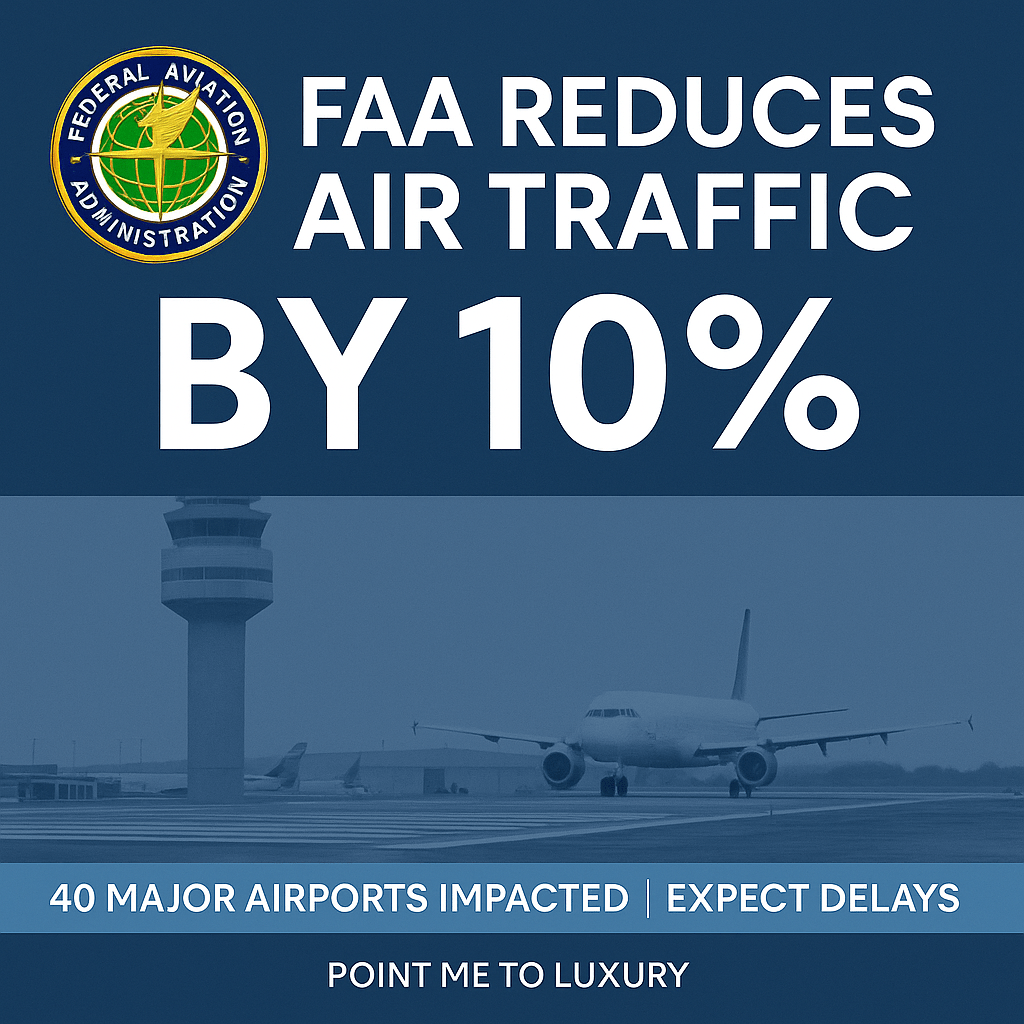
If you’re flying soon, expect tighter skies. The Federal Aviation Administration (FAA) has announced a plan to reduce air traffic by 10% across 40 major U.S. airports, citing staffing shortages and safety precautions linked to the ongoing government shutdown.
This move aims to ease operational pressure on air-traffic controllers, many of whom are working extended hours without pay. But it also means travelers may face more cancellations, delays, and schedule changes during one of the busiest travel periods of the year.
🛫 What’s Changing
The FAA has directed airlines and airports in high-volume markets to temporarily reduce flight operations by roughly 10%, beginning immediately. These cuts are focused on the country’s largest and most congested airports — including New York, Chicago, Atlanta, Los Angeles, and Dallas.
Rather than spreading the reductions evenly, the FAA and airlines are prioritizing major hub routes while trimming smaller, regional, and lower-priority flights.
⚠️ Why the FAA Is Taking This Step
With reduced staffing and increased workloads, the FAA says this measure is intended to protect safety and maintain reliability in air-traffic control centers.
The 10% cut allows controllers to manage workload more safely, avoid fatigue-related risks, and maintain system stability. It’s a proactive move designed to prevent a full-scale operational breakdown during the shutdown.
🧭 How Travelers Will Be Affected
If you’re flying in or out of a large airport over the next few weeks, here’s what to expect:
- ✈️ Possible cancellations or rescheduled flights, especially for smaller markets and regional connectors.
- 🕒 Longer delays, as reduced takeoff and landing slots tighten available scheduling.
- 🧳 More rebooking notifications — airlines are already adjusting schedules and issuing flexible change options.
- 🚗 Potential ripple effects — even airports not directly targeted could see delays due to congestion in controlled airspace.
- 🧾 Points bookings may need flexibility — award flights could be repriced or rescheduled.
For travelers with tight itineraries, it’s smart to add buffer time, choose earlier flights in the day, and enable airline text alerts to stay ahead of disruptions.
💡 Tips to Minimize Impact
✅ Book on hub-to-hub routes — these flights are the least likely to be canceled.
✅ Avoid tight connections and allow extra layover time.
✅ Use flexible or refundable fares if possible.
✅ Track your flights via your airline’s mobile app or FlightAware for real-time updates.
✅ Redeem points carefully — flexibility matters more than squeezing out an extra cent per mile during system strain.
✈️ Final Thoughts
A 10% traffic reduction across major airports is unprecedented in recent years, but the FAA says it’s a necessary safeguard to ensure safety amid staffing shortages. While the skies won’t shut down, the next few weeks will test airlines, controllers, and travelers alike.
If you have upcoming flights, take a proactive approach: confirm your itinerary, leave extra time, and prepare for some turbulence — not in the air, but on the ground.
 pointmetoluxury.com
Leave a comment