
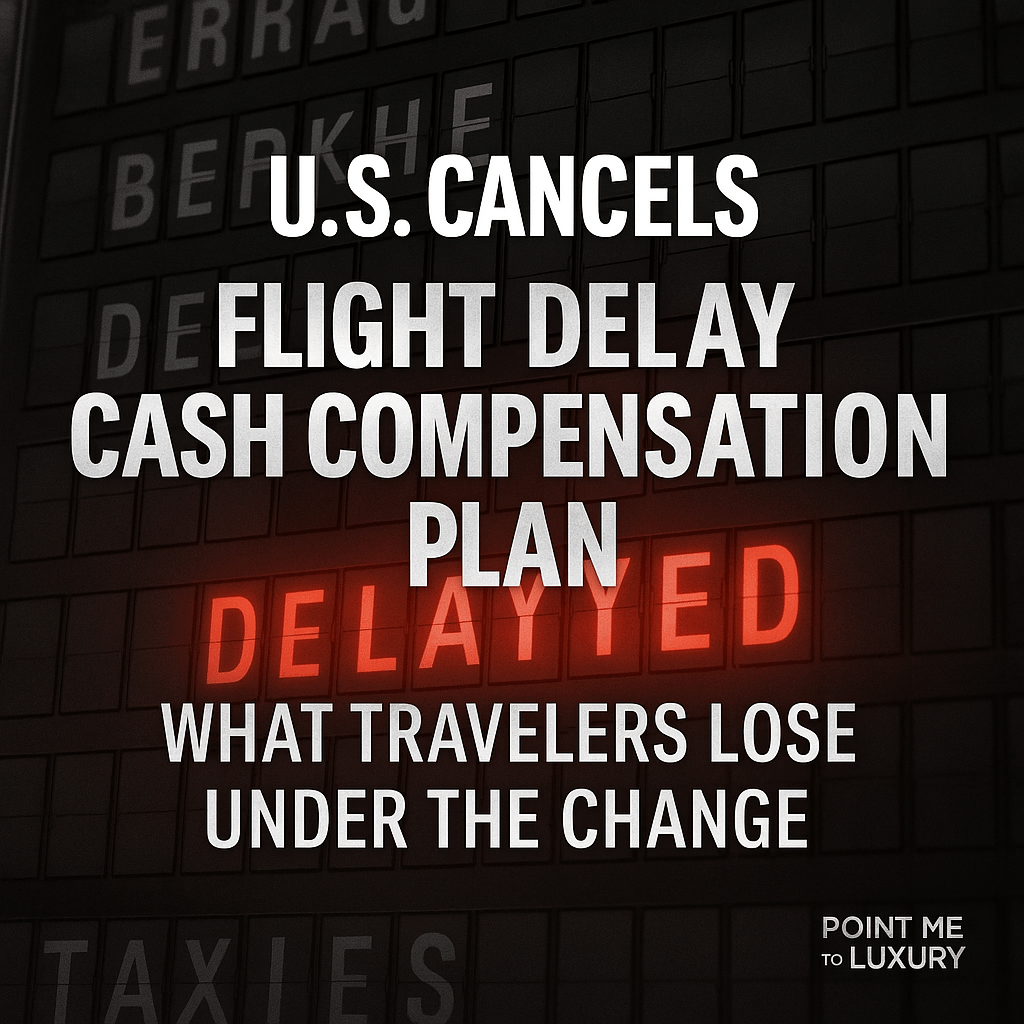
A major shift in U.S. airline regulation has just landed: a proposed rule that would have required airlines to pay passengers cash for significant flight delays has officially been withdrawn. This change impacts your rights as a flyer — especially if you’ve built travel plans assuming stronger protections.
🧾 What Changed
- The proposal would have mandated airlines to pay passengers $200 to $300 for domestic flight delays lasting 3 to 6 hours,
- $375 to $525 for delays between 6 and 9 hours,
- And up to $750 to $775 for delays of 9 hours or more, when the disruption was due to airline-controlled factors.
- The rule was introduced under the previous administration, but has now been formally pulled and will no longer proceed.
While airlines are still required to refund cancelled flights or major schedule changes, the additional voluntary “cash-bonus for delays” component is gone.
🧭 Why It Matters
- Many frequent flyers and points collectors hoped the U.S. would adopt protections similar to Europe’s routine compensation model.
- With this rollback, U.S. passengers face fewer guaranteed cash compensation options when flights are delayed by airline errors or internal issues.
- Airlines may still offer vouchers, meals, hotel stays, or rebooking — but the legal requirement for cash paymentswill not go forward.
- For travelers redeeming points or premium cabins, this means one less layer of risk mitigation — especially during heavy holiday travel periods.
✈️ What You Should Do as a Traveler
- Operate on the assumption that you will not automatically receive cash compensation for delays, unless specific carrier policy applies.
- Check your airline’s own policy: Some carriers voluntarily offer vouchers, meal credits, or hotel stays even when not legally mandated.
- Maintain award-travel flexibility: If you’re redeeming or connecting during busy hubs or weather-sensitive flights, build contingency time and alternatives.
- Consider travel insurance or premium credit-card protections that offer delay compensation separate from airline rules.
- Document any delay or disruption (boarding announcements, screenshots, delay notifications) — even if federal cash compensation isn’t required, you may negotiate with the airline or your issuer.
✅ Final Take
The cancellation of the proposed delayed-flight cash payment rule means U.S. travelers lose one of the more protective policy options that had been in motion. While refund rules for cancellations remain, the right to predetermined cash compensation when airlines cause delays (3+ hours) is off the table.
For anyone who travels often — especially via award tickets, point redemptions, or at times of high network stress — this signals that flexibility and backup plans matter more than ever. Smart travelers will assume there’s limited recourse, build in more buffer time, and adopt strategies for handling disruptions without relying on mandated airline compensation.
 pointmetoluxury.com
Leave a comment